
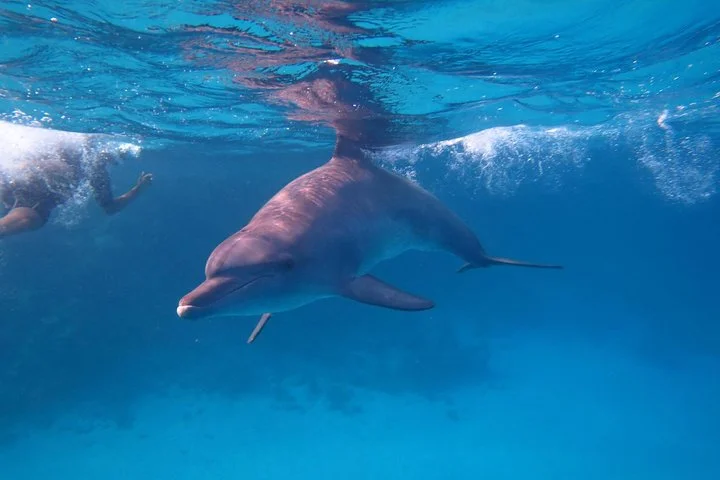

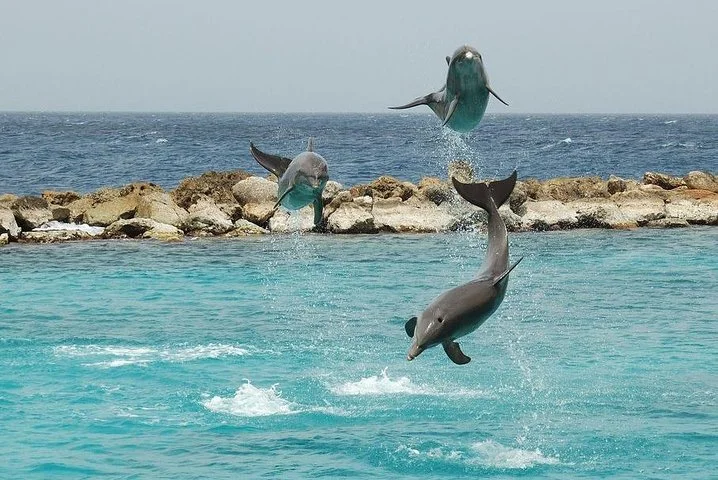
Dolphin House Snorkeling & Swimming with Dolphins – Hurghada
Duration: ~7 hours (7:00 a.m. – 3:30 p.m.)
Trip Type: Group/Family-friendly
Pick-up: From your hotel (7:00–8:00 a.m.)
Program Highlights
-
Swim and snorkel with wild dolphins in their natural habitat
-
Stop at three different snorkeling spots to explore vibrant coral reefs
-
Enjoy a delicious onboard lunch prepared by the crew
Trip Description
Begin your adventure with a hotel transfer to the Hurghada jetty, where you’ll meet your captain and friendly crew. Sail out to the famous Dolphin House, known for its playful dolphins and stunning reefs.
During the trip, enjoy stops at three snorkeling locations, giving you the chance to swim with dolphins and admire colorful corals and marine life. Around 1:00 p.m., the crew will serve a freshly prepared lunch on board.
In the afternoon, the boat returns to the port, and you’ll be transferred back to your hotel around 3:30 p.m.
This Dolphin House excursion is an unforgettable Red Sea experience, perfect for families, couples, and sea lovers.
Book Through WhatsApp:

Travel is the movement of people between relatively distant geographical locations, and can involve travel by foot, bicycle, automobile, train, boat, bus, airplane, or other means, with or without luggage, and can be one way or round trip. Travel can also include relatively short stays between successive movements.
The origin of the word "travel" is most likely lost to history. The term "travel" may originate from the Old French word travail, which means ‘work’. According to the Merriam Webster dictionary, the first known use of the word travel was in the 14th century.
It also states that the word comes from Middle English travailen, travelen (which means to torment, labor, strive, journey) and earlier from Old French travailler (which means to work strenuously, toil). In English we still occasionally use the words "travail", which means struggle. According to Simon Winchester in his book The Best Travelers’ Tales (2004), the words "travel" and "travail" both share an even more ancient root: a Roman instrument of torture called the tripalium (in Latin it means "three stakes", as in to impale).

Leave a Reply